Integration into your production process
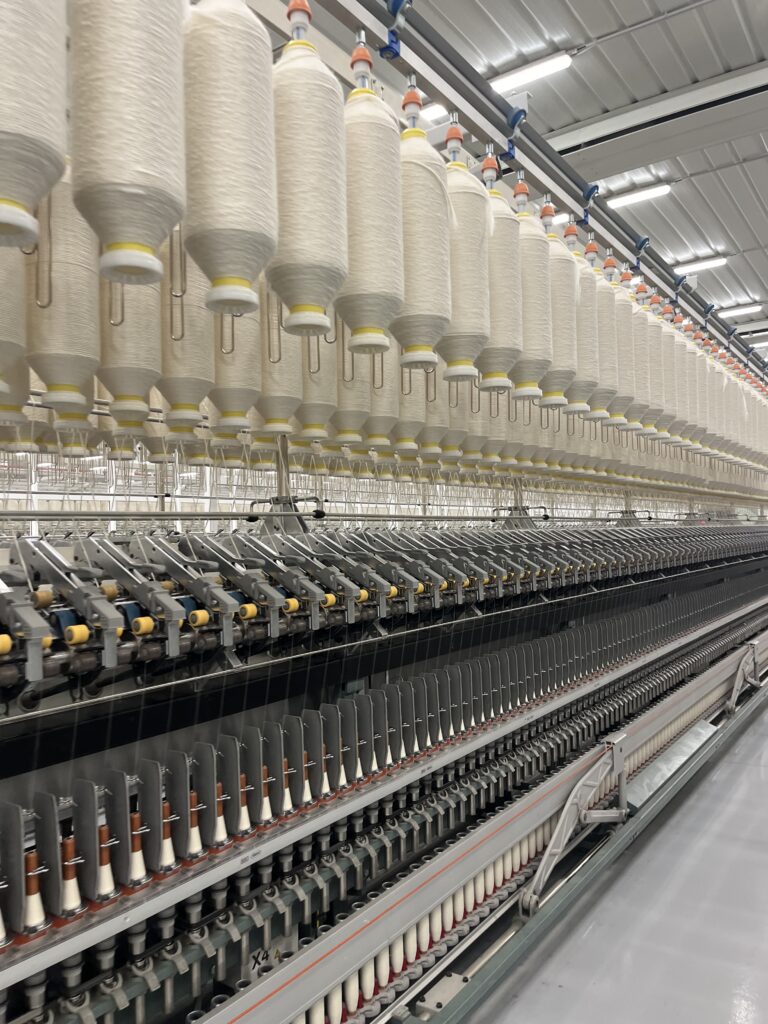
Our fibers and yarns are fully compatible with your existing machinery and workflows, ensuring effortless transition while eliminating the need for additional investment.
At NOOSA®, we manufacture bio-based fibers and yarns, designed to be seamlessly integrated into your established production processes. Our innovative materials can be recycled at the end of their life, providing a convenient solution for your manufacturing needs in line with the demand for circularity.
Discover NOOSA®
Today, textile manufacturers are confronted with many challenges, from environmental concerns to meeting regulatory compliance and traceability in their supply chain. Consumption of clothing and footwear is expected to increase by 63% by 2030, so let’s make them better together.
To transition away from fossil-based materials while maintaining performance, NOOSA® emerges as a viable option, ensuring both longevity and circularity of your products. This shift will not only help you reduce your carbon footprint and increase transparency but also offer solutions to your customers seeking circular alternatives. Additionally, NOOSA® presents an opportunity to add value to your textile waste — a vital consideration given that currently less than 1% is repurposed, often due to the lack of recycling options for blended fabrics.
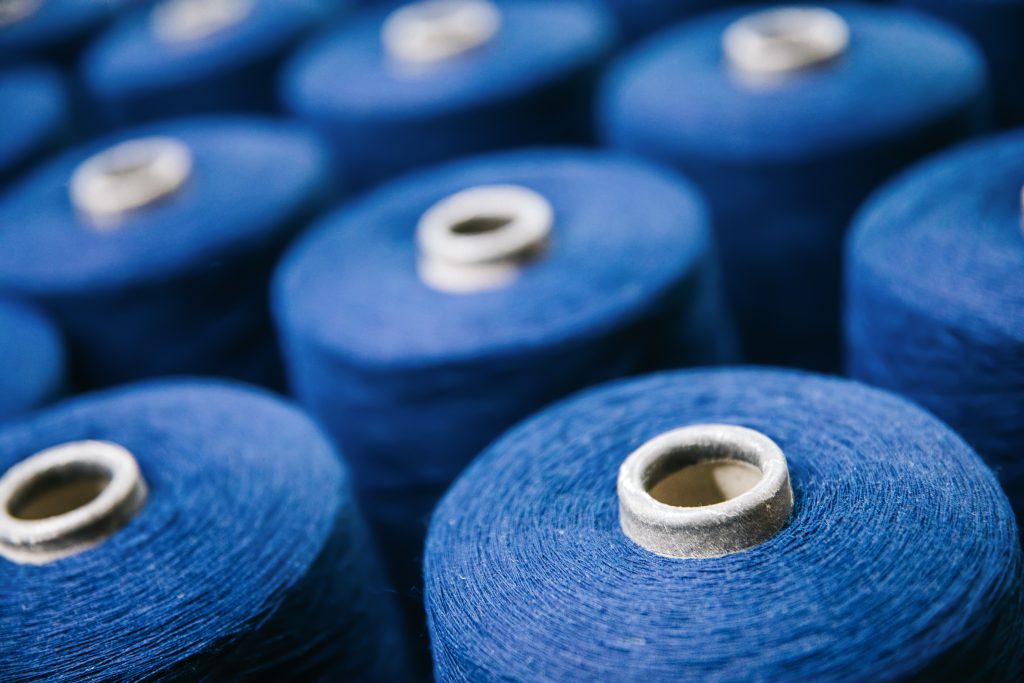
Manufacture for durability
Find an alternative to fossil-based materials without compromising on quality or performance.
Manufacture to comply
Comply with EU legislations for textile circularity and waste prevention.
Manufacture for minimal waste and impact
Reduce and revalorize textile waste at pre-consumer level, lower water, energy and chemical use in your processes.
Manufacture for better traceability
Control your supply chain and increase transparency.
Key benefits for manufacturers
Our fibers and yarns are fully compatible with your existing machinery and workflows, ensuring effortless transition while eliminating the need for additional investment.
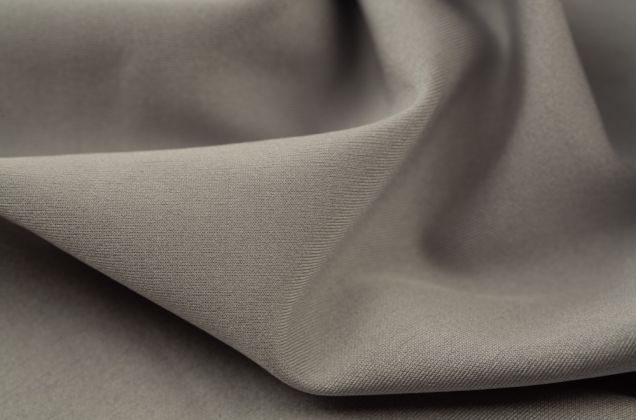
Experience the cutting-edge features of our fibers and yarns, renowned for their innate comfort, exceptionally low absorbency, durability, and superior performance.
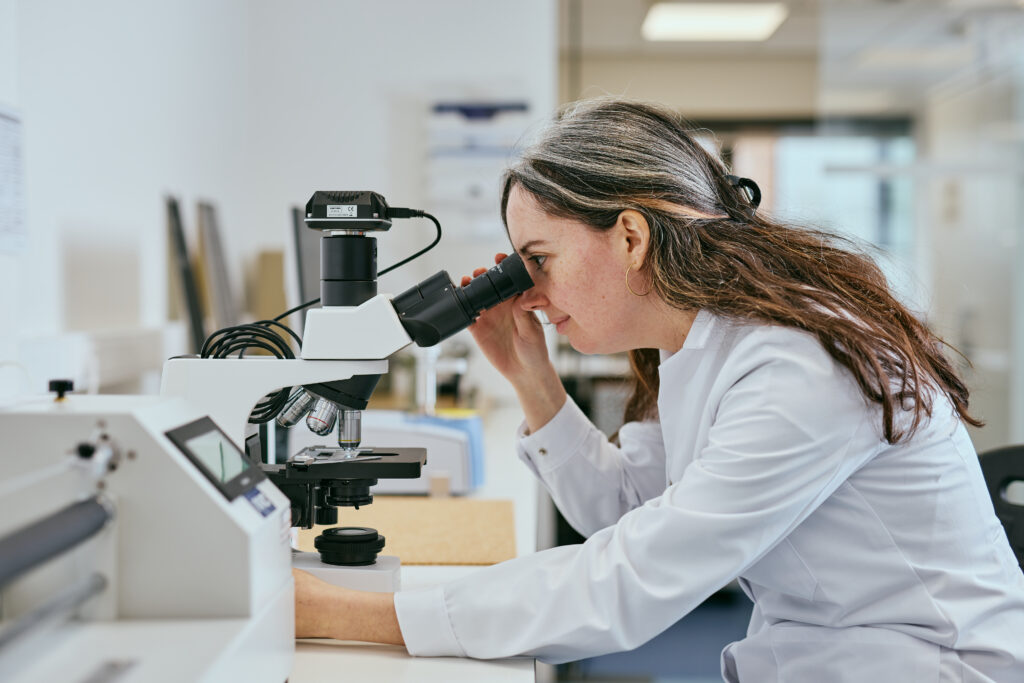
Benefit from our comprehensive technical support services, tailored to optimize results at every stage of the manufacturing process, spanning from yarn spinning to thermosetting.
Leverage NOOSA®’s exclusive network and trademark benefits.
As a valued certified manufacturer, you gain direct access to our unparalleled global network encompassing brands, yarn spinners, knitters and weavers, opening a world of opportunities for your business. We also facilitate your supply chain, guaranteeing transparency and traceability every step of the way, from initial feedstock to recycling processes.
Moreover, as a privileged partner, you will enjoy exclusive rights to participate in new product launches, ensuring you stay ahead of the curve in the market. And to further enhance your reputation, you will proudly feature the NOOSA® trademark, symbolizing quality and innovation.
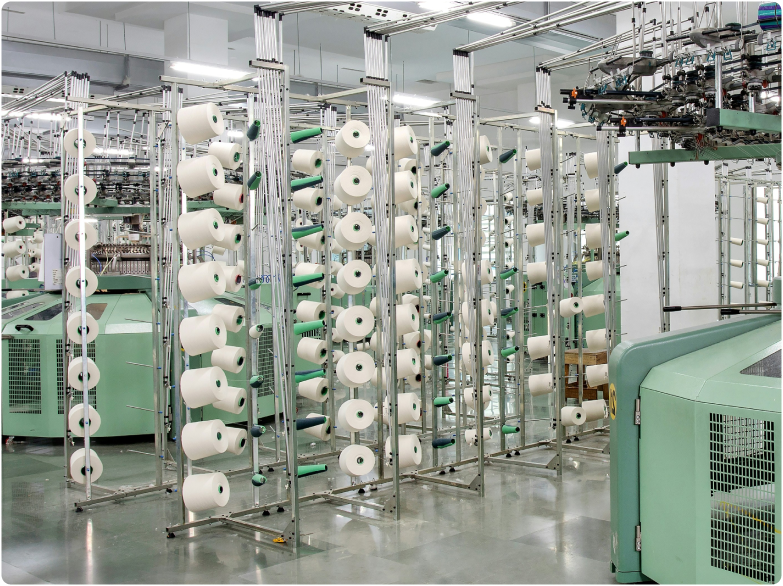
Our manufacturing partners
NOOSA®‘s manufacturing partners and customers are working with us towards our vision to bring the textile industry to circularity. These leading manufacturers are using NOOSA® fibers and yarns to make high quality fabrics and products.



What our partners say
We are glad to have the opportunity to work and collaborate with NOOSA®. Their commitment to a circular textile industry while ensuring the best product quality, makes them a great and invaluable partner.
Inovafil is pleased to participate with NOOSA® in the search and development of new bio-based and circular materials. The process of exchanging knowledge and advancing 360 degree recycling by using old garments as raw materials for textiles has been incredibly rewarding.
NOOSA® was our choice for providing T-shirts to our volunteer team, and they went beyond our expectations! The quality of the T-shirts was really good; the white wasn’t transparent at all and all the volunteers loved them! Furthermore, the team was very attentive, and delivery deadlines were respected. If you’re seeking quality, long-lasting, and environmentally conscious clothing, then we recommend NOOSA®.
Innoviris recognizes NOOSA® as a key innovator in the textile industry, committed to reducing its ecological footprint. Their approach, centered on circularity and eco-design, coupled with advanced technology, aligns perfectly with the region’s values and priorities in innovation. We commend their efforts to incorporate biobased fibers and promote recycling, thereby making a significant contribution to the Brussels region’s commitments to sustainable development.
As a sustainability enthusiast and Belgium’s B Corp Country Coordinator, I am proud NOOSA® is part of our growing Belgian Community. A company dedicated to bringing circularity to the textile industry and reducing environmental impact through innovative products. By pioneering new approaches to production and inspiring change in the textile sector, they exemplify the path forward in leveraging business as a force for good.
We are very happy to count NOOSA® fiber as a certified Solar Impulse Efficient Solution. It truly accelerates environmental transition by offering an industrially scalable and economically viable solution to reduce textile waste, a necessity in the development of a circular textile industry.
NOOSA® fiber is a game-changer technology in sport product materials, aligning with NOLT’s circular vision to introduce our R-SOCK, the world’s first circular sport sock. Kudos to NOOSA® for pioneering such an innovative and circular solution in the textile industry.
I’m pleasantly surprised to see a young company so thoroughly investigating and testing their developed materials. A strong team with a lot of experience is building up to an innovative circular future in Europe.
This project that offers circular perspective to the fashion industry is in line with our investment strategy. Moreover, the dynamism and the complementary of the entrepreneurs convinced us that they were the right team to lead this ambitious project.
Like our HOUSE, NOOSA® is a young company specializing in a promising product. We share common values and goals, such as bringing circularity to the textile industry and reducing the environmental impact of our activity in the textile sector. After a first trial in 2022 and great results and positive feedback, we developed a specific Capsule dedicated to NOOSA® yarn.
Have you got a project in mind?
Are you a yarn spinner looking for an innovative fiber? Are you a fabric manufacturer looking for a bio-based alternative? Whatever your area of interest may be, we look forward to connecting with you!